
The White Hart has stood on Dorchester-on-Thames High Street since the 1600s, when it opened as a coaching inn feeding and sheltering travellers between Oxford and London. It’s been Grade II listed since 1963, and that listing shapes what a stay here feels like in ways worth knowing before you arrive. Here’s what the building gives you, and what it doesn’t.
What the listing actually covers
Two separate entries on the National Heritage List cover parts of the hotel, both Grade II, both added in July 1963. The main entry describes an inn dating from the late 16th or early 17th century with 18th and 20th century extensions, built with timber framing and brick infill, including herringbone brickwork and the date 1691 picked out in black bricks on the front.
The second covers what’s now the bar and restaurant, a house with an adjoining former bakery, 17th century with an 18th century front. Inside, the listing records chamfered and stopped beams and open fireplaces, which are the same beams and fireplaces you’ll be sitting under. You can read both entries on the Historic England list.
Listing means the building’s character is protected. It doesn’t mean nothing can change, but it does mean changes are considered rather than casual, which is why a building of this age still has its original bones.
Why no two rooms are the same
A building extended across four centuries doesn’t produce a corridor of identical boxes. Our rooms are individually designed, and they differ in shape, size and outlook because the walls were put where they were put a long time before anyone was thinking about hotel layouts.
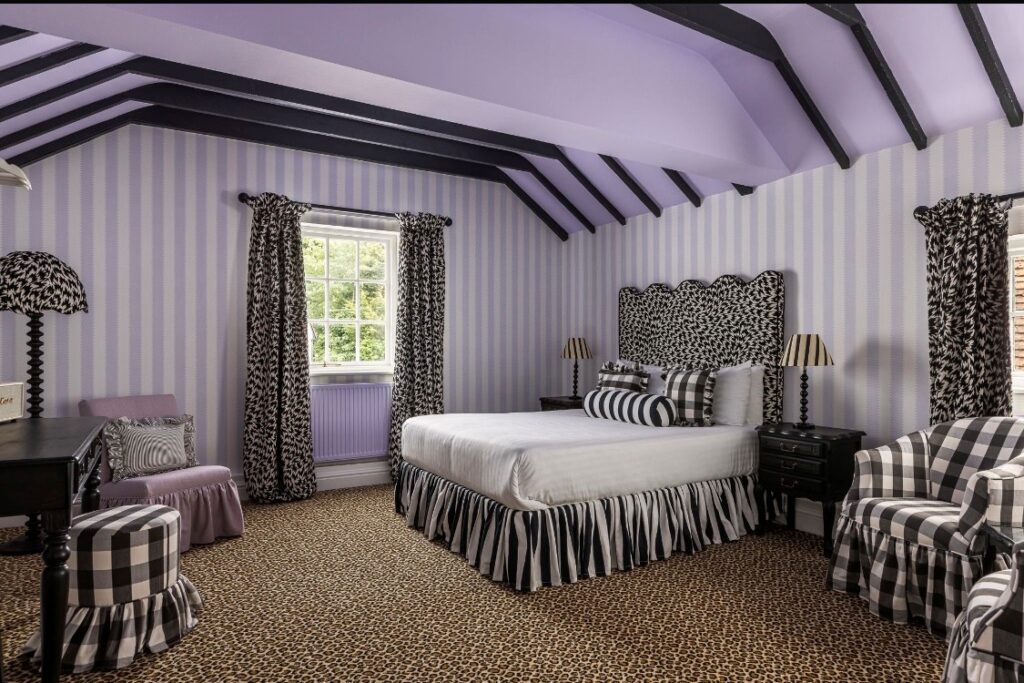
Every bedroom has a full bathroom with a shower or bath, a comfortable bed and the amenities you’d expect. What varies is the character: the beams, the angles, the windows. If you have a preference, whether that’s a particular size or a specific feel, it’s worth mentioning when you book rather than leaving it to chance, and the team can talk you through what’s available for your dates. Have a look at the rooms to get a sense of the range.
The things people notice
Exposed beams and open fireplaces are the obvious ones, and the gentle creak of wooden floors is part of the deal in a building this old. Some people find that charming and some find it a change from a modern hotel, so it’s worth knowing which you are.
Ceilings and doorways in older parts of a 17th century inn sit where the frame put them, so if height matters to you, ask. Equally, if you’d prefer something in one of the later parts of the building, say so when booking and we’ll do what we can.
Eating in the oldest part
The restaurant occupies the converted bakery, which is the section the listing describes as having chamfered beams and open fireplaces, and the baker’s fireplace is still there. Breakfast runs from 7am to 9am on weekdays and 8am to 10am at weekends, lunch is served from noon, and dinner from 6pm to 8pm. Sunday lunch is a full roast with all the trimmings. Current menus are on our dining pages.
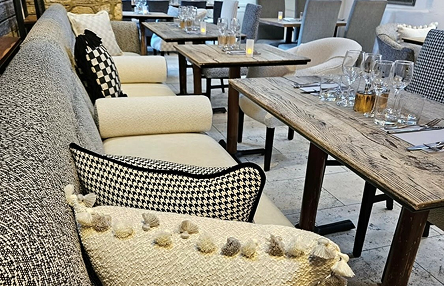
Eating in a room that was baking bread three centuries ago is a fair chunk of the reason to stay in a building like this rather than something newer on a bypass.
Worth asking before you book
An old building rewards a conversation. If there’s something specific you need, whether that’s a particular kind of room, access considerations, or a question about how a room is set up, ring reception and ask rather than assuming either way. We’d far rather sort it in advance than have you arrive to something that doesn’t suit.
Planning a stay? Give us a ring or book direct, and tell us what matters to you about the room. We’ll match you to the right one.